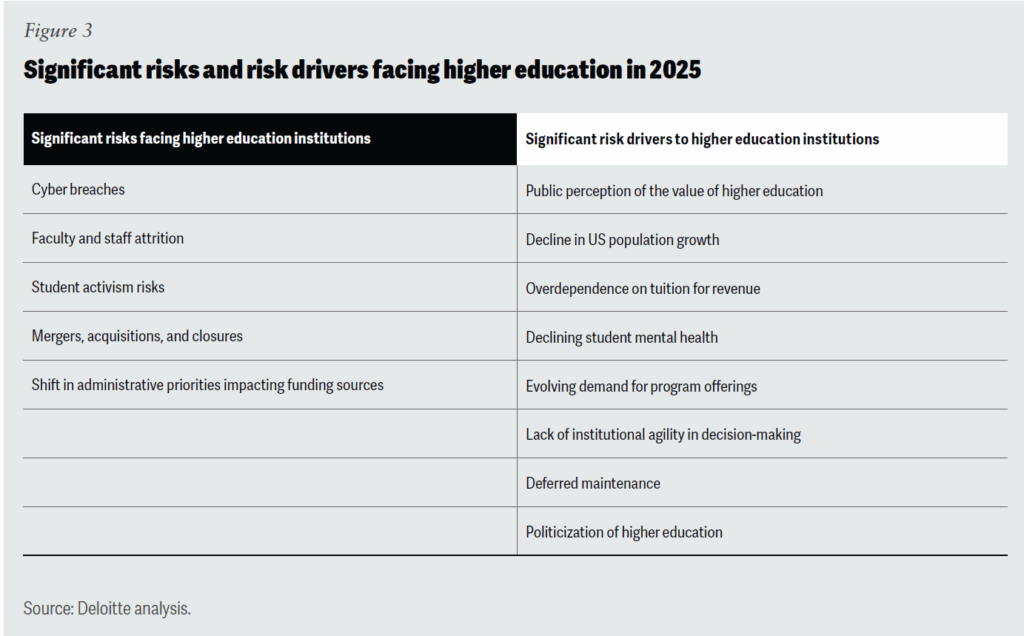
Faculty and staff attrition is one risk facing higher education in 2025; the average turnover for top leadership is 21%. (Clark, C. et al., 2025)
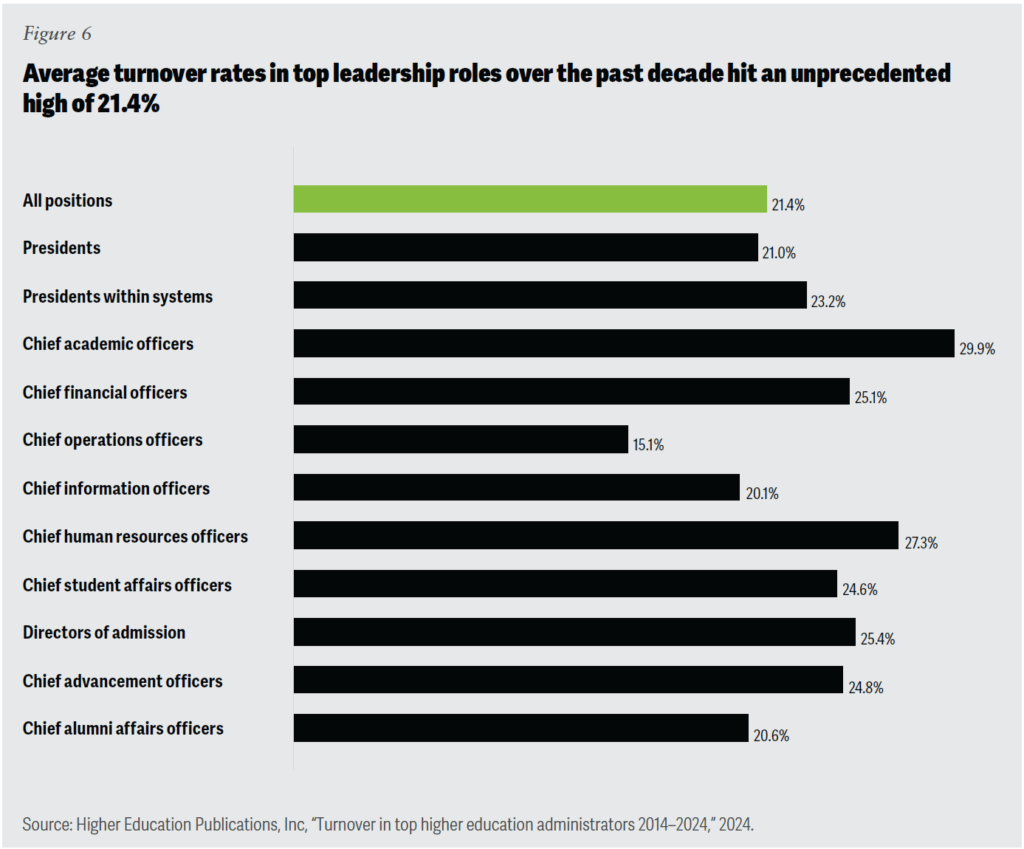
Yet, with such an obviously significant problem, those advocating for change frequently encounter resistance. Great technology - like the type Nous Savons is building - cannot fully be leveraged in an environment where priorities are misaligned and/or the corporate culture is so toxic that skilled individuals take their talents elsewhere. It is critical to ask "why" the turnover rate is at unprecedented levels. Could it be the constant psychological warfare and gaslighting that occurs at some of these intuitions? If that is indeed one of the culprits, it would unsurprisingly lead to knowledge hoarding, which does not bode well for healthy information flow and thus bad for business. Further, the financial reality at many (most?) institutions is an uncomfortable but necessary conversation.
"Institutions now have an opportunity to consider the strategic budget choices that have all too often been made through inertia, rather than through a clear-eyed look at what activities, programs, and expenses are truly driving impact toward the institution’s mission and exist for the benefit of students." (Clark, C. et al., 2025) Surely, this type of thinking should expand to all stakeholders affected by such decisions.
 Nous Savons supports those who understand these dynamics and who facilitate initiatives designed to ameliorate the situation. It is in our rational self-interest to celebrate the success of post-secondary institutions across all aspects of their operations.
Reference

Clark, C., Cluver, M., Fishman, T., Kunkel, Danylle. 07 April 2025. 2025 Higher Education Trends: A look at the challenges and opportunities shaping America’s higher education sector. Deloitte Insights.